The history of Halloween: from Samhain to an evening of puzzles
Where Halloween comes from: Irish Samhain, All Hallows’ Eve and the turnip lanterns that became pumpkins. How it meets All Saints’ Day in Krakow, and an idea for an evening of puzzles in the city.
Redakcja KrakowSecrets
/
Publikacja: October 15, 2023
/
Aktualizacja: October 1, 2026
In this guide
Halloween is the evening of 31 October, the eve of All Saints’ Day. The name comes from All Hallows’ Eve, the evening before the feast of All Saints, and the customs themselves have several layers. The oldest is the Irish Samhain, the start of winter. Next come the Christian celebrations of 1 November. Pumpkins, costumes and collecting sweets in their present form took shape largely later, in North America, where Irish emigrants brought their customs.
In Poland, Krakow included, Halloween falls just before the day when most families visit their loved ones’ graves. That’s why it’s worth knowing not only its history but also how it meets All Saints’ Day and All Souls’ Day.
Samhain and the start of the darker half of the year
The National Museum of Ireland describes Samhain as a festival marking the first day of winter, celebrated on 1 November. Its eve, Oíche Shamhna, is still celebrated in many parts of Ireland with a feast and games. Fruit and nuts were gathered for that night, ending up on the table and in family games. Fortune-telling about future marriages was popular.
In old beliefs, this was the night when the spirits of the dead could return to the family home. People also believed evil spirits were about, so they avoided walking alone after dark and protected the house with holy water. The longer evenings were ideal for telling stories about what might be waiting beyond the safety of the doorstep.
Seen this way, Halloween is part of the history of everyday life: preparing food, getting together and trying to come to terms with the unknown. It isn’t only about being scared.
Where the name comes from and what 1 November has to do with it
The name Halloween comes from the evening before All Saints’ Day. The celebration on 1 November most likely began in Rome in the 8th century, under Pope Gregory III, and over the following centuries spread across the whole Western Church. Its eve coincided with the old Irish time of passing into winter, and over time the two traditions began to blend.
This is an important distinction. Not every modern Halloween custom can be traced straight back to the ancient Celts, and many popular stories about “ancient rituals” have little solid support in the sources.
From turnips to pumpkins
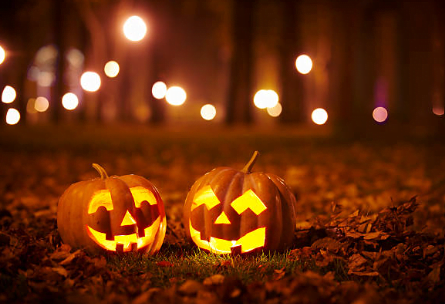
Before the pumpkin became the symbol of Halloween, people in Ireland and Britain carved scary faces into turnips, potatoes and other root vegetables and put a candle inside. The National Museum of Ireland displays a plaster cast of one of these lanterns from the early 20th century, known as a “turnip ghost”.
In North America, Irish emigrants swapped the turnip for the pumpkin, which is bigger and easier to hollow out. Gradually, in the 19th and early 20th centuries, the hollowed-out pumpkin with a candle became the most recognisable decoration of the evening.
Costumes followed a similar path. The Irish museum describes masks used to frighten the neighbours, and groups of adults and children in disguise who went from house to house performing. This is one of the roots of today’s “trick or treat”.
Costumes, lanterns and sweets today
Modern Halloween is easiest to recognise by its costumes, decorations and collecting sweets. What the celebrations are like depends on the place and the people taking part. Some go for terrifying masks, others prefer funny costumes or just an ordinary film night.
A lantern doesn’t have to be menacing. You can give it a smile, a geometric pattern or a shape inspired by a favourite story. If you’d like to nod to the older tradition, try hollowing out a small turnip instead of a pumpkin. In the same way, a costume can suggest a character with a single prop, without an expensive outfit or hours of preparation.
“Trick or treat” only makes sense when everyone accepts the rules. Saying no isn’t an invitation to pester someone. If you’re organising your own get-together, it’s better to agree how sweets will be collected among friends than to assume that every open door means someone wants to play.
Halloween, All Saints’ Day and All Souls’ Day in Krakow
In Poland, Halloween is a borrowed custom. Here it meets an older, local tradition of remembering the dead in autumn. In the old rites known as Dziady, people believed that the souls of their ancestors returned home at the turn of October and November. Food was left out for them and fires were lit to keep them warm. According to ethnographers, today’s grave candles echo this custom. 1 November is All Saints’ Day, and 2 November is All Souls’ Day.
In Krakow you can see these days all over the city. Crowds head to Rakowicki Cemetery and other cemeteries, and every year the Public Transport Authority (ZTP) runs extra tram and bus lines with numbers starting with 8. You can check the current list and the dates they run on the ZTP website. The city encourages people to use public transport at this time, because traffic arrangements change around the cemeteries. In 2024 the Dr Henryk Jordan Youth Centre also ran free walks around Krakow’s cemeteries. Whether they’re taking place in a given year, check the announcements on krakow.pl (in Polish).
This means a few practical things for planning your evening:
- Halloween get-togethers usually take place on 31 October or in the days before, because many people spend 1 November with their families at the graves.
- Costumes and loud partying don’t belong near cemeteries. Save the costume for a get-together at home or a route around the city.
- If the evening of 31 October comes right before a trip to the cemetery, plan a shorter activity so you don’t run out of energy for the next day.
An evening of puzzles in the city
Samhain was a time for stories, and Krakow has its own legends and tales that suit an autumn evening nicely. Instead of a costume party, you can turn the evening into a route with puzzles.
The Krakow Legends app is a game on your phone that leads you through the city centre from point to point on the map. There’s no time limit and no fixed start time, you can take breaks, and one access covers a group playing on one phone. The operator estimates the game at about one and a half to two hours. You’ll need a phone with location turned on.
Older teenagers and adults might like the crime game The Last Crime by EscapeCity. The story draws on old Krakow criminal cases, and the route runs from the Vistula Embankments towards Błonia and Salwator. The game card gives about 140 minutes, 3.5 km and a difficulty of 5/10. Each team gets an iPad with a map and augmented reality, plus a suitcase with case files and clues. It’s a story about murders, so it’s not one for young children. Agree the start time when you book.
After dark, any outdoor game needs a few extra arrangements:
- Charge your phone or bring a power bank, because the app uses location the whole time.
- Wear something that makes you visible, especially on the embankments and at road crossings.
- When crossing the street, look at your surroundings, not the screen.
- With children, choose legends rather than crime stories, and agree in advance that anyone can say “that’s enough”.
A special Halloween event, costumed hosts or a discount for dressing up all need to be confirmed separately with the organiser. The date of 31 October alone doesn’t mean a regular game changes its rules. The best part of the plan can stay simple: a story you choose together and a moment to talk once it’s over.
Author of this post

Redakcja KrakowSecrets
Zespół redakcyjny KrakowSecrets. Piszemy o krakowskich miejscach, trasach i wydarzeniach, a praktyczne szczegóły – godziny, ceny, dojazd – sprawdzamy przed publikacją.
More from this category
Latest posts
Recently added
Editor’s note
One good tip every Wednesday
No daily noise or random list of events.
gramiejskakrakow.pl
Turn a walk into a city mission
If you’re going as a group, choose the version with puzzles and a shared finale.
More from the blog