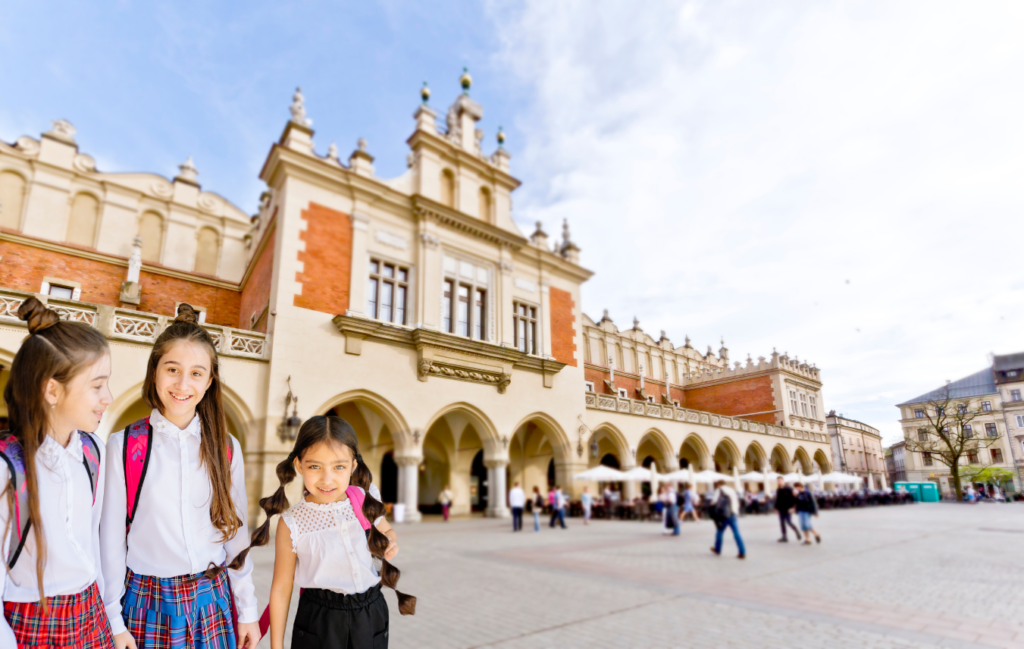
Kazimierz in Krakow: history you can see between the streets
What to see in Krakow’s Kazimierz district: a walking route from the old town hall on Plac Wolnica to Szeroka Street, with addresses, dates and plans for an hour, half a day or a Saturday.
Redakcja KrakowSecrets
/
Publikacja: November 30, 2024
/
Aktualizacja: October 1, 2026
In this guide
The top things to see in Kazimierz are the old town hall on Plac Wolnica, Corpus Christi Basilica, Plac Nowy with the Okrąglak, and Szeroka Street with the Old Synagogue and the Remuh Synagogue and cemetery. You can link them into a single walk that leads from the Christian centre of the former town to the heart of Jewish Kazimierz. Along the way you’ll also spot the trace of a river that no longer exists.
Kazimierz is known for walks, cafés and evenings out. But to really understand this part of Krakow, it’s worth looking at its town hall, its places of worship and the way its streets run. They’re a reminder that this isn’t a district designed purely for leisure. It was once a separate town, home to many generations and a place marked by history.
It’s best explored without rushing. A few places seen properly will show you more than a long route where every building turns into just another name.
A town named after a king
Kazimierz received its town charter from King Casimir the Great on 27 February 1335. It had its own authorities and its own market square. A sign of that independence is the town hall at Plac Wolnica 1, which has housed the Seweryn Udziela Ethnographic Museum (in Polish) since 1950.
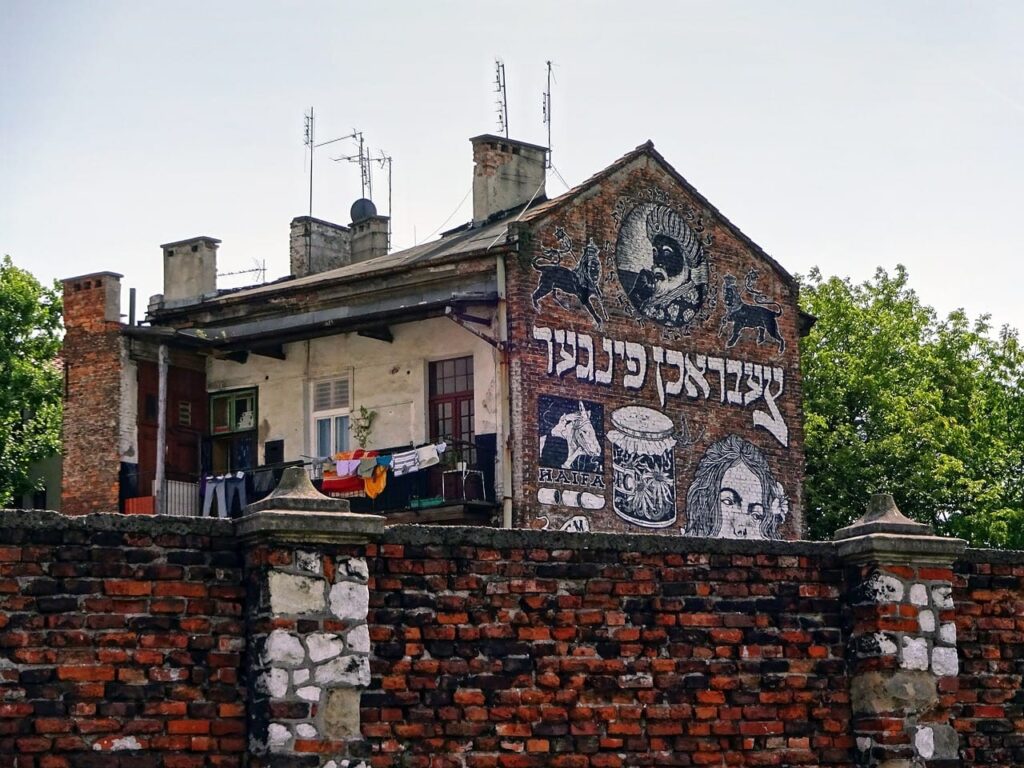
The old market square was much bigger than today’s square. The museum describes it as a square with sides of about 195 metres, and the name “Plac Wolnica” only caught on in the 19th century. So when you stand in front of the town hall, try to picture different proportions and ask yourself where the town’s life was centred. It’s a good place to start, because it puts the later stories of Kazimierz in order.
Kazimierz was finally incorporated into Krakow’s administrative boundaries in 1800. That’s when the town lost its autonomy and the town hall lost its original role. Don’t confuse that moment with the later filling-in of the old Vistula riverbed.
The river you can’t see
Today’s Dietla Street runs roughly along the old bed of the Old Vistula. It’s an important detail if you’re trying to read a historical map. The streetscape looks different once you realise that where the road and the greenery are now, there used to be a river.
Remains of the Royal Bridge, uncovered during roadworks at the junction of Krakowska and Dietla streets, brought that old crossing back to mind. As you take in the width of Dietla Street, try to set today’s view against a picture of two riverbanks joined by a bridge.
That doesn’t mean Kazimierz was a cut-off island at every point in its history. The layout of the water and the buildings kept changing, so a single modern photo never tells the whole story.
A step-by-step walking route around Kazimierz
The order below leads from the former Christian centre of the town to Szeroka Street. That way, you first see what the independent town looked like, and only then step into the history of the Jewish community.
- Town Hall, Plac Wolnica 1. Start at the old market square of Kazimierz, now home to the Ethnographic Museum.
- Corpus Christi Basilica, ul. Bożego Ciała 26. A few steps from the square. The church has been in the care of the Canons Regular of the Lateran since 1405.
- High Synagogue, ul. Józefa 38. Built in 1590.
- Isaac Synagogue, ul. Kupa 18. Built between 1638 and 1644.
- Plac Nowy and the Okrąglak. The round building went up in 1899-1900 as a covered market hall. From 1927 the Jewish community adapted part of it as a ritual poultry slaughterhouse, which was closed during the war.
- Tempel Synagogue, ul. Miodowa 24. Built in 1862 for the Association of Progressive Israelites.
- Szeroka Street. On a single street you’ll find the Old Synagogue (no. 24), the Popper Synagogue from 1620 (no. 16) and the Remuh Synagogue (no. 40).
- Old Synagogue, ul. Szeroka 24. The oldest surviving Jewish building in Poland, dating from the 15th century. Today it’s a branch of the Museum of Krakow with the exhibition “The History and Culture of Jews in Kraków”. Check current opening hours and tickets on the Museum of Krakow website.
- Remuh Synagogue and Cemetery, ul. Szeroka 40. A Renaissance synagogue from the mid-16th century with the cemetery next to it. Visitors are drawn to the grave of Rabbi Moses Isserles (d. 1572), the only one in the cemetery that wasn’t destroyed during the war. You’ll find more details on krakow.travel.
If you have more time, you can finish at the New Jewish Cemetery at ul. Miodowa 55. The official description of the whole route is on the city’s website, krakow.pl (in Polish).
How to fit the walk to your time and the day of the week
- You have an hour. Choose Plac Wolnica, Józefa Street and Szeroka Street, and only go inside one place. It’s better to see one synagogue properly than three in a rush.
- You have half a day. Add the exhibition in the Old Synagogue or the Ethnographic Museum and a break at Plac Nowy. That gives the route an indoor part, which comes in handy in bad weather.
- You’re planning a Saturday. The Remuh Synagogue is closed on Saturdays and Jewish holidays. On that day, save your visit for another time or see it from the outside.
- You’re going with children. Start at Plac Wolnica and the story of an independent town with its own town hall. It’s easier for children to grasp that Kazimierz was once a separate town than to remember dates.
Different parts of one Kazimierz
The area around Plac Wolnica and Corpus Christi Basilica shows an important part of the town’s Christian heritage. Szeroka Street, the Old Synagogue and the Remuh Synagogue lead you into the history of the Jewish community. You need both perspectives, so Kazimierz isn’t reduced to a single theme.
The Jewish history of this place was tragically cut short by the German occupation and the Holocaust. Today’s bars and cafés and the district’s popularity with tourists shouldn’t be described as a simple continuation of pre-war life. At the same time, Jewish culture in Krakow isn’t only a thing of the past. It’s also shaped by communities and institutions that are active today.
When you visit synagogues and memorial sites, adjust your behaviour to their character. In the Remuh cemetery, look out for the notes with prayer requests left at the grave of Moses Isserles, and don’t move them. These are places that deserve your attention, whatever you’ve planned next in terms of cafés or an evening out.
Where to take a break
Plac Nowy is the natural place for a rest. There are plenty of cafés and bars on the ground floors around the square, and on Saturdays there’s a flea market here, with second-hand clothes on Sundays.
It’s a good idea to plan your break halfway along the route, between Józefa and Szeroka streets. That way the second half of the walk, with the most important memorial sites, doesn’t land just when you’re getting tired.
Kazimierz as a backdrop for a game
Not every courtyard is a public passage, so exploring the backstreets doesn’t mean going into the private parts of tenement buildings. If you’re after a story-driven challenge, take a look at EscapeCity’s Blackout game, which uses the streets of Kazimierz as the setting for a fictional mission. A game like this doesn’t replace the story of the district’s real history, though.
A good way to end your outing is to go back to one detail you noticed earlier. The town hall, the trace of the river or the layout of the square take on meaning once you can link them to a specific story.
Author of this post

Redakcja KrakowSecrets
Zespół redakcyjny KrakowSecrets. Piszemy o krakowskich miejscach, trasach i wydarzeniach, a praktyczne szczegóły – godziny, ceny, dojazd – sprawdzamy przed publikacją.
More from this category
Latest posts
Recently added
Editor’s note
One good tip every Wednesday
No daily noise or random list of events.
gramiejskakrakow.pl
Turn a walk into a city mission
If you’re going as a group, choose the version with puzzles and a shared finale.
More from the blog