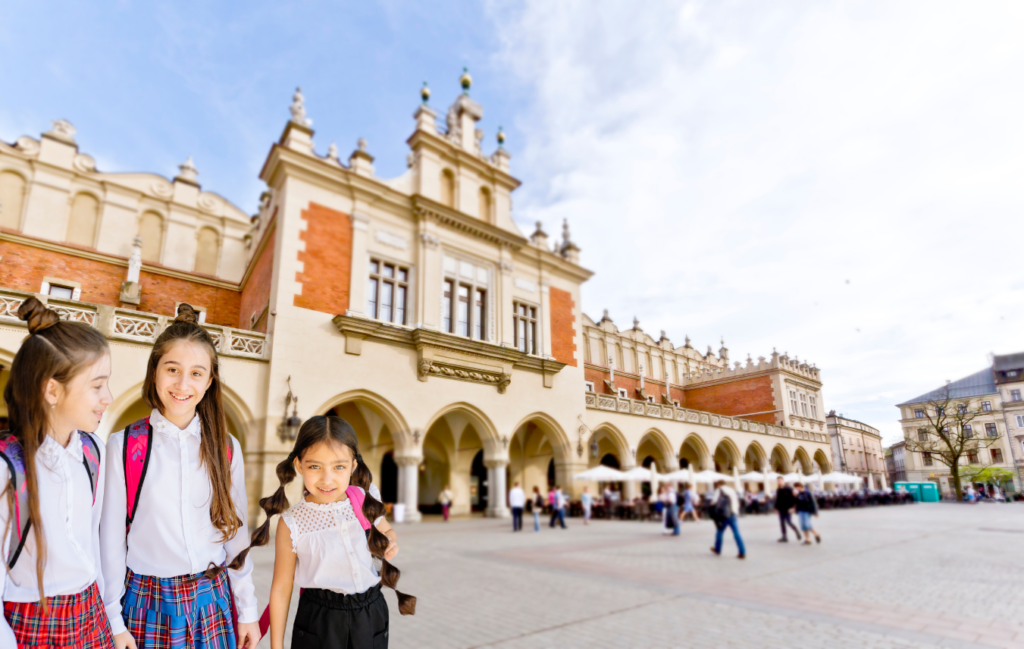
Explore medieval Krakow: history and the world of legends
Where to see medieval Krakow: the Market Square laid out in 1257, Rynek Underground, the Town Hall Tower, the walls with St Florian’s Gate and the Barbican, the Royal Route and Wawel, plus how to tell fact from legend and game.
Redakcja KrakowSecrets
/
Publikacja: February 15, 2025
/
Aktualizacja: October 1, 2026
In this guide
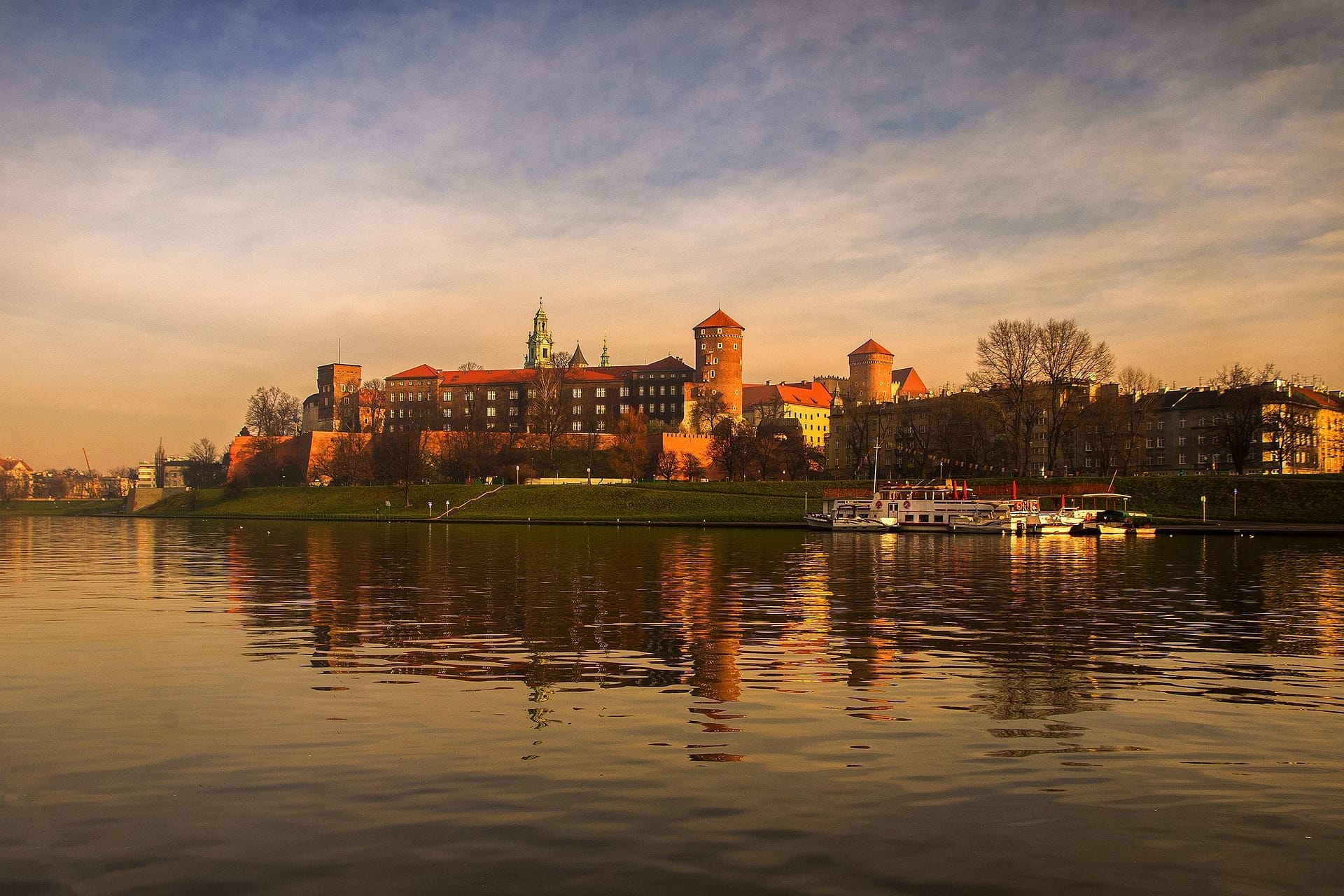
The easiest way to see medieval Krakow is in five places: the Main Market Square, laid out in 1257; Rynek Underground beneath its paving; the Town Hall Tower; the stretch of walls with St Florian’s Gate and the Barbican; and Wawel. They’re linked by the Royal Route, which you can walk from Matejko Square all the way up to the castle.
Along the way, it helps to tell three things apart: historical evidence, legend, and a modern game that borrows old motifs. Each of them can get you curious about the city, but they answer different questions.
In short, before you set off:
- On 5 June 1257, Duke Bolesław the Chaste issued the charter that founded Krakow under Magdeburg law.
- Before the Market Square was laid out, this spot was a cemetery, and later a craftsmen’s settlement destroyed during the Mongol invasion of 1241.
- The first records of Krakow’s town hall date from 1316. Only the tower survives of the whole building.
- In 1320, Władysław the Short was crowned in Wawel Cathedral. It’s the first coronation of a Polish ruler on Wawel Hill recorded in the sources.
- The Barbican was built in 1499, and St Florian’s Gate is the only one of the city’s eight former gates to have survived to this day.
1257: how the city you’re walking through began
The founding charter of 5 June 1257 is kept today by the National Archives in Krakow (in Polish). It was issued by Bolesław the Chaste, Duke of Kraków and Sandomierz. Krakow was founded under Magdeburg law, modelled on Wrocław, and became a self-governing municipality. It was run by a hereditary wójt (the town’s chief officer) with a bench of aldermen chosen from among the burghers.
For anyone on foot, the most important result is the town plan. According to the archives, the layout drawn up then still exists today: a huge square in the middle with wide streets running off it. Stand at a corner of the Market Square and look down Floriańska or Grodzka Street, and you’ll see that medieval order for yourself. The buildings around it changed over the centuries, but the street grid stayed.
Under the Market Square and in the Town Hall Tower
Rynek Underground is a branch of the Museum of Krakow beneath the Market Square. According to the museum, its exhibition tells the story of medieval Krakow from the 10th to the 15th century. It begins before the city’s founding, with the cemetery, the craftsmen’s settlement and the Mongol invasion of 1241. Then it shows the Market Square as a place of trade, remains of medieval buildings and the foundations of the Cloth Hall.
Among the objects, the museum lists a silver denarius of Władysław the Short with an image of St Stanislaus, a 14th-century silk purse and a lead ingot weighing almost 700 kg. Finds like these show best that Krakow was a city of merchants.
The Town Hall Tower is the last part of the town hall first recorded in 1316. The former city treasury was on the ground floor. Twenty stonemasons’ marks survive there, left by the medieval builders. The viewing point is reached by 110 steps of uneven height. The museum links these places with the walls and the Barbican in its Medieval Kraków Tour. You’ll find the ticket rules and access to each branch on that page.
The walls, St Florian’s Gate and the Barbican
The Museum of Krakow says the city’s fortifications date back to the 13th century. The city’s coat of arms shows how much they mattered: it features a section of walls with an open gate in the middle. Of the old ring, only a short stretch by Pijarska Street remains. The rest was replaced by the Planty, the green belt that, according to the city website (in Polish), was laid out where the walls, moat and earth ramparts once stood.
At the City Defence Walls branch, you can go inside the Haberdashers’ Tower and walk along the guards’ gallery that links it with St Florian’s Gate and the Carpenters’ Tower. The tower of St Florian’s Gate is 34.5 m high. This was the most important of the city gates, and the most distinguished guests entered Krakow through it.
The Barbican is younger. It was built in 1499, when, after John Albert’s (Jan Olbracht’s) failed Bukovina campaign of 1497, the city faced the threat of an invasion by Wallachians, Turks and Tatars. It has 130 embrasures on four levels, and its walls are 3 to 3.65 m thick. The moat around it was about 26 m wide and 6 m deep. Before you visit, check the announcements on the branch page. The museum posts information there about renovation work and changes to opening hours.
The Royal Route, the way of ceremonial entries
According to the city website (in Polish), the Royal Route was the path of coronation entries, funeral processions and religious processions. It starts at Matejko Square and runs through St Florian’s Gate, along Floriańska Street, across the Main Market Square and down Grodzka and Kanonicza Streets to Wawel Royal Castle. The official tourist website krakow.travel estimates that the walk itself, without going inside anywhere, takes about an hour.
This route is a good lesson in caution. Not everything along it is medieval. St Andrew’s Church on Grodzka Street has a Romanesque structure, but the Church of Saints Peter and Paul next door is Baroque. The castle you see on Wawel today is a Renaissance rebuild. Rather than guessing from appearances, read the monument’s description or the plaque by the entrance.
Wawel was a seat of power before the city was founded
Wawel Hill is older than the chartered city. According to Wawel Royal Castle, in the 9th century it was the main stronghold of the Vistulans. After the Kraków bishopric was established in the year 1000, a stone cathedral was built. In 1138, Bolesław the Wrymouth named Krakow the seat of the senior duke.
In 1320, Władysław the Short was crowned in the cathedral. During his reign, work began on the Gothic cathedral, the third on this site, and the wood-and-earth fortifications were replaced with masonry ones. His tomb began Krakow’s royal necropolis. His son, Casimir the Great, expanded the Gothic castle. In 1364, it hosted the wedding of the king’s granddaughter to Emperor Charles IV, combined with the famous congress of monarchs.
The Gothic residence survived until a fire in 1499. Around 1504, it began to be rebuilt in the Renaissance style. So on Wawel, look for the Middle Ages mainly in the cathedral and in the remains of earlier buildings, not in the arcaded courtyard.
Fact, legend and game are three different stories
Wawel’s own museum website calls the stories of the dragon, Krak and Wanda early medieval legends. That’s a good model to follow. A legend isn’t historical proof, but it helps you ask why a particular place became the setting for a story.
If you’d rather explore the Royal Route through challenges, there are two ways to do it. Kraków Legends by EscapeCity is a game with Game Masters: your team gets an iPad with augmented reality and follows the route from Matejko Square to Wawel. The full version takes up to 2.5 hours, the shorter one up to 2 hours. The operator points out that the plot featuring Master Twardowski is fantasy, but the facts about old Krakow are real. Krakow Legends in the app is a separate product that runs on your own phone. The route is 3.5 km, from the Grunwald Monument across the Market Square to Wawel, and you can pause the game and finish it later.
Indoors, medieval motifs appear in the House of Krak escape room at Gamescape. It’s a fantasy story about noble houses fighting for the throne after Krak’s death, with 90 minutes to play. The operator warns that the room has tight spaces and narrow passages. It isn’t a reconstruction of life in old Krakow, but an original world full of puzzles.
What stays with you after a day like this
Chronological order works well. Start at Rynek Underground, where you’ll see the time before 1257. Then climb the Town Hall Tower, walk over to the Barbican and head back down the Royal Route to Wawel. That way you’ll see the city of merchants, its defences and its seat of power in the order they developed.
At the end, try naming one discovery from each category: a fact confirmed at the museum, a motif from a legend you’ve heard, and something invented for the game. This simple exercise lets you enjoy the story without mixing it up with history. Krakow doesn’t lose any of its mystery this way. It just gains more layers to uncover.
Author of this post

Redakcja KrakowSecrets
Zespół redakcyjny KrakowSecrets. Piszemy o krakowskich miejscach, trasach i wydarzeniach, a praktyczne szczegóły – godziny, ceny, dojazd – sprawdzamy przed publikacją.
More from this category
Latest posts
Recently added
Editor’s note
One good tip every Wednesday
No daily noise or random list of events.
gramiejskakrakow.pl
Turn a walk into a city mission
If you’re going as a group, choose the version with puzzles and a shared finale.
More from the blog